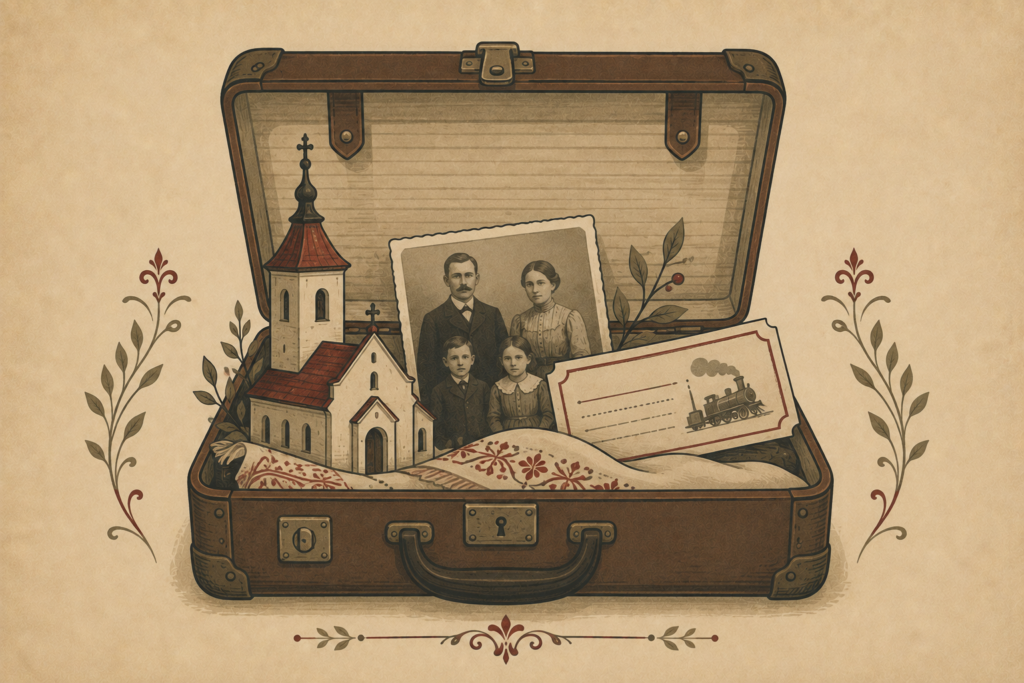
Polish heritage travel allows descendants of immigrants to connect with their family history by visiting the places where their ancestors lived, worked, worshipped, and built their communities. Whether you’re planning your first trip to Poland or returning to explore a specific ancestral village, understanding what to expect can make the experience far more meaningful.
Researching family origins before traveling can help you identify hometowns, locate cemeteries, churches, archives, and historical landmarks connected to your ancestors. Many travelers find that combining genealogy research with a heritage journey creates a deeper understanding of both their family’s story and Poland’s history.
The guides below cover trip planning, visiting ancestral villages, and making the most of a genealogy-focused journey through Poland.
Visitors interested in Polish heritage travel often seek:
• Ancestral villages and hometowns
• Family cemeteries and memorials
• Churches and parish records
• Local archives and museums
• Historical landmarks connected to family history
• Genealogy-focused travel planning
Frequently Asked Questions
Do I need to know my ancestor’s exact hometown before visiting Poland?
No. Many travelers begin with only a surname or a general region. Genealogy research can often identify specific towns, parishes, and family connections before a trip.
When is the best time to visit ancestral villages in Poland?
Spring and early autumn are generally ideal, offering comfortable weather and easier access to archives, churches, cemeteries, and historical sites.
Can I visit archives during a heritage trip?
Yes. Many regional and state archives welcome researchers, although some records may require advance appointments or requests.
Planning a heritage trip? You may also want to trace ancestors first — see Genealogy Research and How to Find Your Ancestor’s Village in Poland.