Polish Surname Origins: How Polish Last Names Work

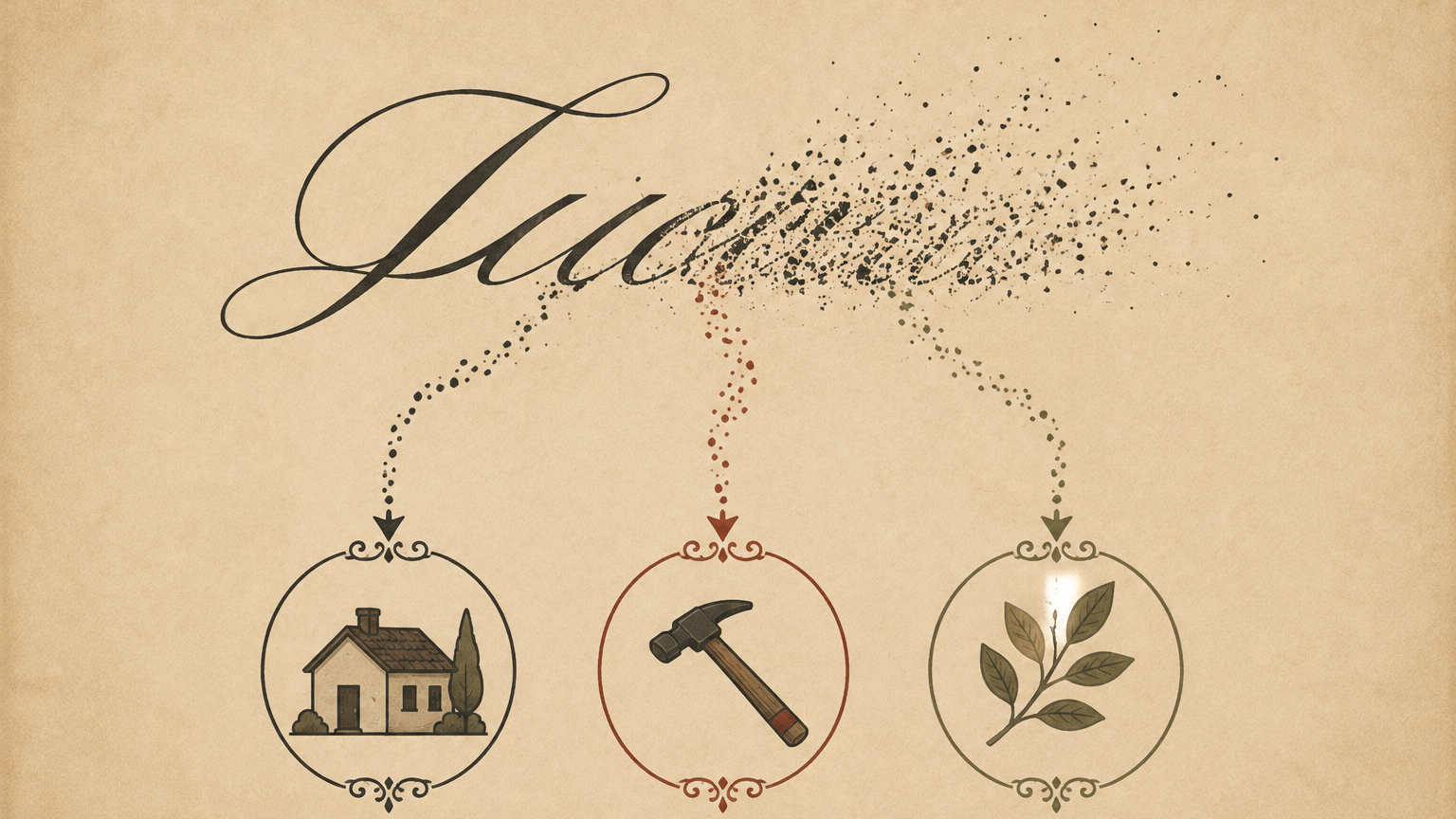
Your Polish surname is not just a label — it’s a compressed biography of the family that first carried it. Encoded in a handful of syllables are clues about where your ancestors lived, what they did for a living, what they looked like, or whose son or daughter they were. Polish last names are among the most linguistically rich and genealogically informative surnames in Europe.

Understanding how Polish surnames work — their structure, their suffixes, the categories they fall into, and how they changed when families emigrated — transforms surname research from guesswork into a disciplined investigation. This guide covers everything you need to know about Polish surname origins: the history of when surnames became fixed, the major categories of surname formation, what the most common suffixes mean, how women’s surnames differ from men’s, and how to use this knowledge in your genealogy research.

Table of Contents

A Brief History of Polish Surnames

Hereditary surnames — family names that passed from parents to children — are a relatively recent invention in Polish history. In medieval Poland, most people were known by a single given name, sometimes with a patronymic (father’s name) or a geographic descriptor added for clarity. The nobility began adopting hereditary surnames derived from their estate names from around the 14th century onward. Peasants and townspeople followed much later, with hereditary surnames becoming standard for the general population in the 18th and early 19th centuries.

The formalization of surnames across all social classes in Polish lands was largely driven by the administrative requirements of the partition powers. When Prussia, Austria, and Russia required all inhabitants to register with fixed hereditary surnames for census and taxation purposes, Polish families who hadn’t yet adopted one were often assigned names by local officials — sometimes translations of patronymics, sometimes descriptors of occupation or appearance, sometimes simply the names of the villages they came from.

This history explains a lot about the diversity and sometimes the apparent randomness of Polish surnames: they formed under different circumstances, at different times, through different linguistic processes — and they were recorded by officials who didn’t always share the family’s language.

The Four Main Categories of Polish Surname Origin

1. Toponymic Surnames (from place names)

The largest single category of Polish surnames, particularly among the nobility, derives from place names — the name of an estate, village, or region associated with the family. A nobleman whose family seat was the village of Kraśnik might be called Kraśnicki; one from Poznań territory might carry a surname ending in -ski, -cki, or -zki derived from the place name.

This is why surnames ending in -ski, -cki, and -zki are so strongly associated with the nobility — they were originally geographic descriptors that indicated land ownership. Over time, the suffix spread beyond the nobility, but its noble origins mean that many -ski surnames can be traced back to a specific village whose name forms the root of the surname.

2. Patronymic Surnames (from father’s name)

Many Polish surnames derive from a father’s given name — the son of Jan became Janowski or Janowicz; the son of Piotr became Piotrowicz or Piotrowiak. Surnames ending in -wicz, -owicz, -ewicz (meaning “son of”) and -iak, -ak, -czak are typically patronymic in origin. These are particularly common among families from the Russian partition where patronymic naming traditions were strong.

3. Occupational Surnames (from trades or roles)

A significant portion of Polish surnames describes what an ancestor did for a living. Kowal (blacksmith) became Kowalski or Kowalczyk. Karczmarz (innkeeper) became Karczmarczyk. Krawiec (tailor) became Krawczyk. Wójt (village mayor) became Wójcik. These occupational roots are often transparent once you know the modern Polish word for the relevant trade.

4. Nickname Surnames (from physical traits or characteristics)

The fourth major category derives from nicknames — descriptors of appearance, personality, or circumstance. Biały (white/fair-haired) became Białkowski or Bielski. Czarny (black/dark) became Czarnecki. Mały (small) became Małecki. Gruby (stout) became Grubowski. These surnames often have a vivid specificity that tells you something real about a long-ago ancestor.

Polish Surname Suffixes Explained

Polish surname suffixes are one of the most distinctive features of Polish names — and one of the most confusing for non-Polish speakers, because the same base root can generate multiple different surnames depending on the suffix applied. Here are the most important ones:

-ski / -cki / -zki (and feminine -ska / -cka / -zka)

The most recognisable Polish surname ending, typically forming an adjective from a place name or a descriptive root. Originally strongly associated with nobility, it has spread across all social classes. Kowalski = “of the Kowal [blacksmith] type” or “from Kowale”; Wiśniewski = “from Wiśniewo” (a place name derived from wiśnia, cherry). These are the most common Polish surnames overall.

-wicz / -owicz / -ewicz

Means “son of” — a patronymic suffix. Janowicz = son of Jan; Piotrowicz = son of Piotr. Common in eastern Poland and the former Kresy, where Slavic patronymic naming was strongest. Many surnames with this ending in Poland are also found in Belarus and Ukraine.

-czyk / -czak / -iak / -ak

Diminutive or “son of” suffixes, often indicating descent from the named person. Kowalczyk = little blacksmith or son of the blacksmith; Maliniak = son of Malina or little Malina. Very common in central and southern Poland.

-ek / -ka

Common Polish diminutive endings that appear in many surnames. Kowalek = little Kowal; Janeczka = little Janecz. These can indicate affection or small size, and appear across all surname categories.

-uk / -czuk

Ukrainian and Belarusian patronymic endings common in surnames from the eastern Kresy — indicating Ukrainian or mixed Polish-Ukrainian ancestry in many cases. Shevchuk, Kovalchuk. Families carrying these surnames from eastern Poland often have a mixed Slavic heritage.

How Polish Surnames Change by Gender

One of the most distinctive features of Polish surnames is that they decline by gender. A man named Kowalski has a wife named Kowalska, daughters named Kowalska, and sons named Kowalski. The surname root is identical; only the ending changes to reflect the grammatical gender of the bearer.

This matters significantly for genealogical research. In 19th-century Polish vital records, a woman is almost always listed with the feminine form of her maiden name — so if you’re searching for the birth record of a woman who later appears as Kowalska in a marriage record, you need to search for Kowalska (feminine) in the birth index, not Kowalski. Many beginners search for the masculine form and miss the feminine records entirely.

The feminine forms of the most common suffix types:

  • -ski → -ska (Kowalski → Kowalska)
  • -cki → -cka (Lipecki → Lipecka)
  • -wicz → -wicz (no change — -wicz is the same for both genders in most regions)
  • -czyk → -czyk (same for both genders in most regions)
  • -ek → -ek or -ka depending on region

Noble Surnames and the Szlachta

Polish noble surnames have their own distinctive patterns. Most noble surnames end in -ski, -cki, or -zki and derive from the name of the family’s ancestral estate. Because many noble families owned multiple estates over generations, they sometimes had several surname variants — or the same estate name generated surnames for multiple unrelated families who once lived on or near the land.

Noble families also carried a heraldic clan name (herb) alongside their surname — so a man might be “Jan Kowalski of the Jastrzębiec clan.” The herb provides an additional genealogical data point that surname alone doesn’t. Our guide to Polish nobility research covers the szlachta system in depth.

Jewish Polish Surnames

Polish-Jewish surnames have a distinct history from Gentile Polish surnames. Most Ashkenazi Jewish families in Poland didn’t adopt hereditary surnames until required to by the partition powers — Austria in 1787, Prussia around 1797, and Russia in 1804–1835. The surnames assigned or chosen at that time were often German in origin (reflecting Prussian and Austrian administrative preferences), or Hebrew/Yiddish in origin for families in areas where officials permitted more flexibility.

Common categories of Polish-Jewish surnames include: German nature words (Goldberg = gold mountain, Rosenberg = rose mountain, Blumenfeld = flower field), occupations (Schneider = tailor, Weber = weaver), Hebrew words or concepts (Cohen/Kohn, Levy/Levi indicating priestly lineage), and Yiddish given names used as surnames (Davidowitz, Moisevich). Some Polish-Jewish families adopted Polish-style surnames with -ski or -wicz endings. The diversity reflects the variety of administrative contexts in which Jewish surname adoption occurred.

How Polish Surnames Changed at Immigration

Polish surnames underwent dramatic transformations at immigration — through deliberate anglicisation, phonetic rendering by immigration officials, or simple changes made by immigrants who wanted to assimilate. Understanding these transformations is essential for connecting emigrant records with Polish origin records.

Common patterns of change include: dropping the -ski ending entirely (Kowalski → Kowal → Cowall), phonetic spelling of a Polish sound that doesn’t exist in English (Szczepański → Shchepanski → Stevens), translating the meaning (Kowal = blacksmith → Smith), or simplifying a consonant cluster (Przybyszewski → Pribish). Our full guide to how Polish surnames changed after immigration covers these patterns in detail with examples.

Surname Distribution: Finding Where Your Name Comes From

Because many Polish surnames are toponymic — derived from place names — surname distribution maps can provide strong clues about geographic origin. If a surname is concentrated in one or two regions of Poland, there’s a good chance your family originated there, even if you don’t yet know the specific village.

The most useful tools for Polish surname distribution research are: the Słownik nazwisk (Dictionary of Polish Surnames) available online through the Polish Language Institute, the Forebears surname distribution tool which shows geographic concentration of surnames globally, and the Moikrewni (My Relatives) portal at moikrewni.pl which provides Polish surname frequency maps at the powiat (county) level. These tools won’t replace village-level research, but they can narrow the geographic target significantly when you’re starting from a surname alone.

Using Surname Knowledge in Your Genealogy Research

Understanding how Polish surnames work pays practical dividends in genealogical research in several ways:

  • Searching for women correctly — always search for the feminine form of a surname in Polish records (Kowalska not Kowalski for female subjects)
  • Identifying spelling variants — knowing that -wicz and -ewicz are the same suffix helps you recognise variants of the same name in records with inconsistent spelling
  • Using phonetic search tools — Geneteka’s phonetic search and JRI-Poland’s Daitch-Mokotoff soundex engine both find variants of the same surname. Use them whenever a direct search comes up short.
  • Geographic targeting from surname distribution — if a surname is concentrated in one voivodeship, start your archive search there rather than nationally
  • Recognising related surnames — a family that appears as Jankowski in one generation might appear as Jankowiak in another, or Jankowicz in a record from a different region. The underlying root (Janko, a diminutive of Jan) connects them all.

Final Thoughts

Every Polish surname is a small piece of history — a compressed record of social class, geography, occupation, or ancestry that has survived through generations of record-keeping, emigration, and name change. Learning to read that history doesn’t require linguistic expertise; it requires knowing the patterns and having the right reference tools.

Start with the suffix — it tells you the structural category the name belongs to. Then look at the root — it often tells you where the name came from or what it originally meant. Then check the distribution map — it points you toward a geographic origin to investigate. Each step narrows the research target and gives you something concrete to search for in the archives.

Continue with our guide to the most common Polish surnames and their meanings, or explore Polish surname endings explained for a deeper look at what each suffix category reveals. Subscribe to our newsletter for weekly Polish heritage guides.

About the Author: Polish Roots Project (Editorial Team)

The Polish Roots Project Editorial Team researches and writes guides for the estimated 20 million people of Polish descent worldwide. Our content draws on Polish state archives, Catholic church records, genealogy databases including Geneteka and Metryki, and the latest developments in Polish citizenship law. Every guide is written to be accurate, practical, and accessible — whether you're tracing your first ancestor or deep into a citizenship application.

Leave a Reply

Your email address will not be published. Required fields are marked *