 Written by: Polish Roots (Editorial Team)
Posted on: May 8, 2026
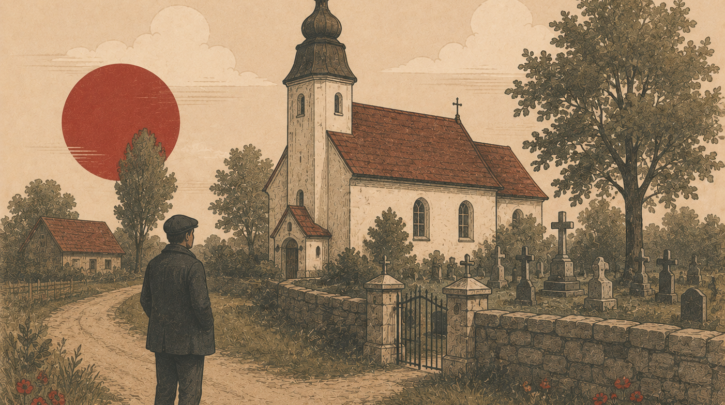
Discovering Your Ancestral Village in Poland: What to Expect
The village is usually smaller than you imagined. And quieter. And more ordinary — a church, a handful of streets, a few dozen houses. But standing there, knowing your great-great-grandmother was baptised in that church and walked that lane to market, the ordinary becomes something…
 Written by: Polish Roots (Editorial Team)
Posted on: May 8, 2026
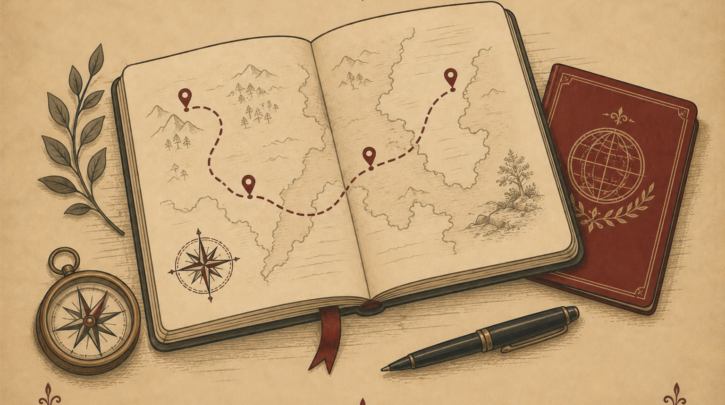
How to Plan a Heritage Trip to Poland
A heritage trip to Poland requires more preparation than a typical holiday. The difference between a deeply meaningful visit and a frustrating one often comes down to how much research was done before departure — whether the right archives were contacted, whether the ancestral village…
 Written by: Polish Roots (Editorial Team)
Posted on: May 8, 2026
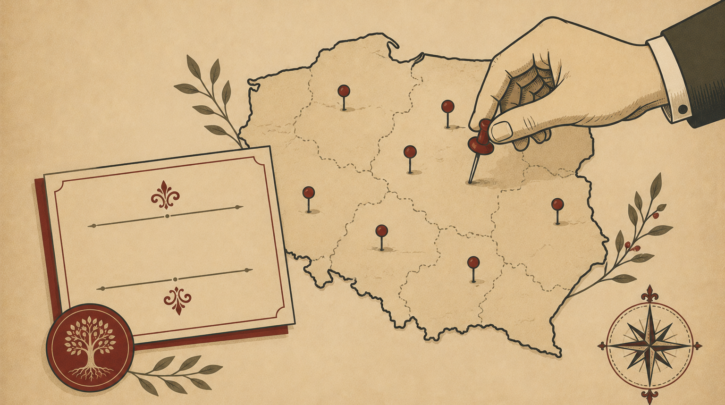
Researching Your Polish Surname: A Step-by-Step Guide
Your Polish surname is a research tool as much as it is a name. Used correctly, it can narrow your search from all of Poland to a specific region, point you toward particular archive collections, and help you identify records you didn’t know to look…
 Written by: Polish Roots (Editorial Team)
Posted on: May 8, 2026
How Polish Surnames Changed After Immigration to America
Somewhere between the gangway of a ship and the desk of an immigration official, many Polish surnames underwent their first transformation. By the time a family had lived in America for a generation, the name their great-grandparents had carried for centuries might be unrecognisable —…
 Written by: Polish Roots (Editorial Team)
Posted on: May 8, 2026
Polish Surname Endings Explained: -ski, -ka, -czyk and More
The ending of a Polish surname is not decoration — it’s information. Whether a name ends in -ski, -wicz, -czyk, -iak, or something else entirely tells you something meaningful about the social class, geographic origin, or family relationship that generated the name in the first…
 Written by: Polish Roots (Editorial Team)
Posted on: May 8, 2026
The Most Common Polish Surnames and Their Meanings
The ten most common Polish surnames are carried by millions of people across Poland and the Polish diaspora — yet most of their bearers have no idea what those names originally meant or where they came from. Knowing the meaning and origin of your surname…
 Written by: Polish Roots (Editorial Team)
Posted on: May 8, 2026
Polish Surname Origins: How Polish Last Names Work
Your Polish surname is not just a label — it’s a compressed biography of the family that first carried it. Encoded in a handful of syllables are clues about where your ancestors lived, what they did for a living, what they looked like, or whose…
 Written by: Polish Roots (Editorial Team)
Posted on: May 8, 2026
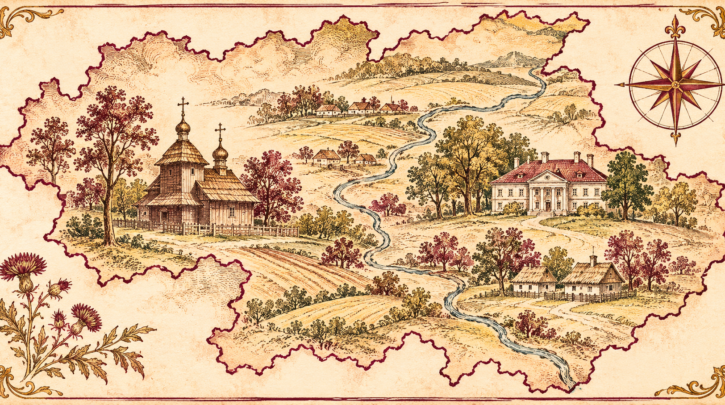
How to Research Polish Ancestors from the Kresy (Eastern Borderlands)
The Kresy — Poland’s eastern borderlands — were once home to millions of Poles, Ukrainians, Belarusians, Lithuanians, and Jews living alongside each other in a landscape that changed political ownership multiple times within living memory. Today, the Kresy lie in Lithuania, Belarus, and Ukraine. The…
 Written by: Polish Roots (Editorial Team)
Posted on: May 8, 2026
Polish Nobility Research: A Guide for Szlachta Descendants
Polish nobility — the szlachta — was one of the most distinctive aristocratic classes in European history. At its peak in the 17th century, the szlachta comprised perhaps 10–15% of Poland’s population, making it by far the largest noble class in Europe relative to total…
 Written by: Polish Roots (Editorial Team)
Posted on: May 8, 2026
Polish Records in Russian Archives: What Exists and How to Access It
For over a century, the heartland of Poland was administered by the Russian Empire. The records of that administration — military conscription files, civil registration books, revision lists, land records — were created by Russian bureaucracy, often written in Russian, and some are still held…